Table of Contents
- New Jersey Home Selling
- Which Areas in New Jersey Offer the Best Return on Investment and Are Easiest for Residential Property Development?
- What Home Styles, Sizes, and Features Tend to Sell Fastest in the New Jersey Market?
- What Should Home Sellers Know About Zoning Laws, Permits, and Regulatory Requirements in New Jersey?
- Which Towns or Cities in New Jersey Are the Easiest, and Hardest, When It Comes to Navigating Real Estate Regulations?
- What Are the Most Effective Flipping and Resale Strategies for Maximizing Profit in New Jersey's Housing Market?
- How Should Sellers Price Their Homes To Attract Buyers While Maximizing Value in New Jersey?
- Which Key Economic, Social, and Regulatory Factors Are Driving Current Trends in New Jersey's Local Property Markets?
New Jersey Home Selling
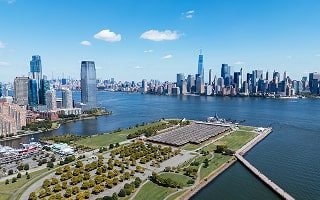
With just 3 months of supply, New Jersey remains a seller's market. The Garden State's real estate landscape is dynamic, reflecting a mix of suburban and urban living arrangements. Despite being the most population-dense state, New Jersey's urban areas face significant affordability challenges that moderate their appeal to investors. Meanwhile, suburban areas, particularly those near New York City, continue to see high demand and rising prices because of their proximity to major employment hubs.
At approximately $565,000, the median home sale price in New Jersey has increased by 7.6% over the past year. This figure puts New Jersey above the national median of about $435,000. In addition, the typical home in New Jersey costs more than in neighboring Delaware ($379,800) and Pennsylvania ($333,300), but remains slightly more affordable than New York State ($588,900).
Each month, New Jersey records an average of around 7,000-8,000 home sales. While this is markedly higher than the monthly average for Delaware (roughly 700), New Jersey trails Pennsylvania (approximately 12,000 per month) and New York State (around 10,000 monthly). The median days on market (DOM) for homes in New Jersey is about 45 as of October 2025, which outpaces the national median (51 days), but lags behind neighboring Pennsylvania (35 days), New York (36 days) and Delaware (40 days).
In 2024, New Jersey issued 3.68 new privately owned housing permits per 1,000 residents, putting the state ahead of Pennsylvania (1.90 per 1,000 residents) but behind New York (5.32 per 1,000 residents).
Though New Jersey recently lowered its effective property tax rate by 0.10%, the effective rate of 2.23% remains the highest in the nation, creating an additional cost driver that homeowners and investors must consider.
At 1 out of every 1,080 homes, New Jersey's foreclosure rate was among the top 10 in the U.S. in Q3 2025. Relative to its border states, only Delaware (1 in every 974 homes) saw more foreclosure activity per housing unit than New Jersey during the period.
Which Areas in New Jersey Offer the Best Return on Investment and Are Easiest for Residential Property Development?
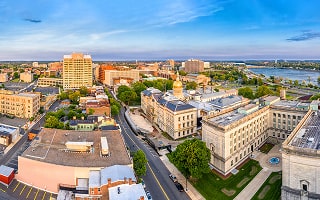
Despite New Jersey's high property tax rate, the state is still a popular target for local and out-of-state investors. Since the state is so diverse and populous, each town, city, or metro area has a specific economic profile that can influence its potential for appreciation and rental demand.
Based on recent trends, the following areas in New Jersey are some of the easiest for residential estate development, and may offer the potential for a higher return on investment (ROI):
-
Jersey City: Proximity to New York City, a strong employment market in tech and finance, as well as consistent demand and high rental rates have drawn investors to the state's second-largest city.
-
Elizabeth: With its dense population and high rental demand, investors tend to enjoy reliable rental cash flow.
-
Newark: With easy access to New York City and Newark Liberty International Airport, the state's largest city has strong rental demand from professionals, students, and immigrants. Combined with low entry prices for investors, Newark offers the potential for high rental yields.
-
Trenton: The state's capital city sees consistent demand for student and government housing, as well as a stable tenant base. Developers are also often offered grants. After decades of a declining population, New Jersey has enjoyed several years of population growth since 2020.
-
East Orange: The municipality has made an aggressive push for redevelopment, transforming the city into one of the fastest-growing rental markets in the state. With affordable pricing and easy access to New York City and Newark by train, East Orange prices continue to climb year over year.
-
Camden: Though Camden's median sales price tripled between 2020 and 2025, the city continues to offer a very low acquisition cost, creating high upside potential for investors. Local healthcare jobs and proximity to Philadelphia make the city an attractive place to invest in real estate development for a high ROI, provided investors understand the risks.
-
Bridgeton: This city puts in significant effort at the local level to reduce blight and attract real estate developers. With low median home prices and a low cost of entry, buy-and-hold investments have the potential for high rental yields.
-
Paterson: Industrial-sector job growth and some redevelopment incentives have created demand for housing, steadily pushing median prices higher.
-
Asbury Park: The city is a major coastal tourism destination in New Jersey, which has created a strong short-term rental market.
-
Hackensack: The city's master plan supports active downtown redevelopment, and there's consistent demand for housing from the legal district and hospital employees. Developers are generally offered incentives, and properties in the city have the potential for long-term appreciation.
What Home Styles, Sizes, and Features Tend to Sell Fastest in the New Jersey Market?
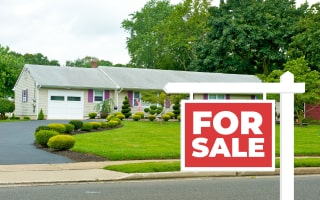
The median days on market (DOM) for New Jersey homes is about 45 days, which is faster than the national median DOM of around 51 days. As with the rest of the Northeast, the best time to sell a home fast in New Jersey is in spring and early summer.
Certain types of homes also tend to sell faster in the New Jersey housing market as a result of buyer trends and preferences, lifestyle upgrades, commuting patterns, and remote work. Factors that impact the speed at which homes sell in the state may also include the list price, condition, and location. However, homes that tend to sell fastest in New Jersey generally have certain features that make them appealing to a larger pool of buyers. Some of these features are listed below:
-
![]()
Bedrooms: In New Jersey, demand is high for 3- to 4-bedroom homes with at least 2 bathrooms. These homes are commonly preferred by individuals and families in suburbs like Edison, Bridgewater, and Piscataway (Middlesex County), where residents have access to NYC trains.
Furthermore, homes with 3-4 bedrooms and at least 2 bathrooms tend to sell fast in areas close to NYC with strong school districts, such as Bloomfield, West Orange, and South Orange (Essex County).
-
![]()
Size and Lot: Generally, homes measuring about 1,800 to 2,500 square feet and sitting on 0.25- to 0.5-acre lots tend to sell more quickly in most New Jersey housing markets. They often come with enough outdoor space to offer expansion potential and are easier to maintain, making them highly attractive to many buyers. In New Jersey, such homes are common and highly sought after in Monroe Township, Brick, Toms River, Hamilton Township, and Rutherford.
-
![]()
Style: New Jersey homebuyers have a preference for the following home styles, which usually tend to sell more quickly than others:
-
Cape Cod and Ranch-Style Homes: These home styles, with single-story living, are mostly preferred by retirees and some families. They tend to sell faster in areas like Brick, Howell, and Lacey Township.
-
Colonial-Style Homes: Colonial homes are sought after in places like Westfield, Princeton, and Morristown due to their spacious layouts and timeless curb appeal.
-
Townhouses: These are generally favored by small families and professionals who prioritize walkability, and are common in places like Hoboken, Montclair, and Jersey City.
-
-
![]()
Modern Upgrades: Homes with modern upgrades, such as energy efficiency upgrades, finished basements, and updated bathrooms, floors, and kitchens, tend to sell quickly in New Jersey, especially when they come with smart features.
In Montclair, Maplewood, and South Orange, homes with open-concept kitchens are typically in high demand, while modern condos with smart features are sought after in places like Hoboken and Jersey City.


What Should Home Sellers Know About Zoning Laws, Permits, and Regulatory Requirements in New Jersey?
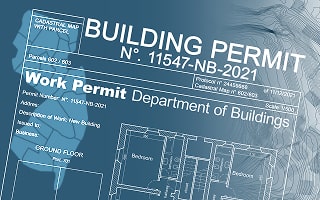
Every municipality in New Jersey has its own zoning laws, each with unique regulatory requirements. These laws regulate the development of real estate in municipalities and can impact commercial, residential, mixed-use, and industrial properties. Hence, understanding zoning and land-use laws in the state is essential for developers, home sellers, and property owners.
Complying with local zoning ordinances isn't just a requirement, it also helps protect property values and preserve ROI. When selling a home, it's typical for buyers to request a zoning compliance letter before closing. A zoning compliance letter generally confirms the permitted uses of the property under local zoning regulations, and helps homebuyers avoid potential legal problems.
Across New Jersey, each city, town, or municipality imposes zoning laws that vary in strictness:
-
Areas with Strict zoning laws: These municipalities are known for their rigid land-use controls, heavy oversight on alterations or additions, and strict density regulations. For instance, while Franklin Lakes (Bergen County) has strict regulations on tree removal, building envelope, and lot size, Montclair (Essex County) has limitations on building height and lot coverage and enforces strict zoning to preserve neighborhood character. In Jersey City, certain historic/overlay districts have strict zoning laws.
-
Areas with less bureaucratic zoning laws: While zoning laws exist, these areas offer fewer permit barriers, flexible zoning interpretations, and more efficient permitting processes. For example, in the residential zones of Barnegat Township (Ocean County), zoning regulations are generally less restrictive, and obtaining permits for additions is generally not difficult. Furthermore, Hamilton Township (Atlantic County) has moderate zoning enforcement and allows home improvements, as well as redevelopments in older parts of the town.
-
Areas requiring a special permit: Public hearings and the approval of the local zoning board of adjustment (ZBA) are mandatory for property uses outside original or existing zoning in some locations. In Hoboken, the ZBA must hear and approve special uses or variances, particularly for multifamily property changes. Similarly, zoning hearings are mandatory for conditional uses and site plan approvals in Morristown, especially for homes near commercial zones. This also applies in South Orange for additions, setbacks, or dormer expansions.
-
Areas requiring a Certificate of Occupancy before legal occupation: Some areas in New Jersey require a Certificate of Occupancy (CO) or Certificate of Continued Occupancy (CCO) before a property can be legally occupied by the new owner or tenant. These include Newark, Union Township, Jersey City, and Cherry Hill. Sellers should resolve all violations before transferring a CO or CCO to buyers. In some of these areas, a CO or CCO from the township may be required before closing a sale.
-
Areas requiring approval of a historic commission: In some New Jersey municipalities, approval of the local historic preservation commission (HPC) is required to use certain materials or colors for building or making exterior changes. Such strict rules are generally in place to preserve historic integrity. In Lambertville, the local HPC must approve any changes visible from the street, while in Cape May, roofing, exterior renovations, shutters, and paint colors all need the HPC's approval. Similarly, the Morristown HPC must review and approve facade alterations or material changes.
Which Towns or Cities in New Jersey Are the Easiest, and Hardest, When It Comes to Navigating Real Estate Regulations?

It's crucial to comply with certain local real estate regulations in New Jersey for various reasons. Generally, properties that comply with zoning standards and current codes appeal more to buyers because they're more marketable and have better value.
Developers or home sellers who fail to comply with key local real estate regulations in the state risk fines and lawsuits, which can sometimes be costly. Maintaining compliance with local real estate laws can help investors minimize risks and liabilities associated with real estate investment, and help position them for the maximum ROI.
Below is an overview of certain municipalities in New Jersey based on how hard or easy it is for home sellers and developers to navigate their local real estate regulations:
Development-Friendly Areas
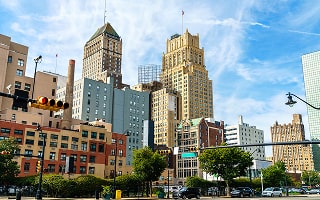
These municipalities have pro-development policies, relatively simple zoning codes, redevelopment incentives, and streamlined permitting processes that make it easy for real estate development:
- Rahway: Home flippers and developers generally face fewer delays; also offers downtown redevelopment incentives.
- Glassboro: Developers generally enjoy expedited approvals from the zoning board and planning department, and the borough is actively revitalizing the downtown.
- Barnegat Township: Real estate developers face fewer zoning restrictions and permitting hurdles in residential districts. The township's regulations largely encourage property improvement and infill development.
- Hamilton Township: Local real estate regulations here encourage mixed-use and residential development. The township is business-friendly and has flexible zoning.
- Newark: The city's recent zoning reforms encourage higher-density and mixed-use developments.
Moderately Regulated Areas
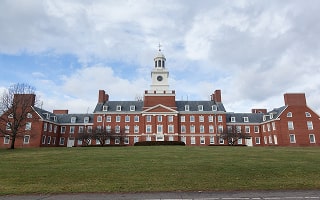
These areas enforce permitting and zoning fairly. The local real estate regulations in the following New Jersey municipalities are not overly bureaucratic or restrictive:
- Cherry Hill and Edison: The zoning and permitting processes in these municipalities are relatively predictable. They have clear CO/CCO and permitting requirements. While zoning may be strict in some districts, these environments are not hostile to real estate development.
- Clifton: This city has reasonable permit requirements and transparent zoning rules, with moderate scrutiny on multifamily changes or additions.
- Piscataway: While a CO/CCO is required, there's no extreme bureaucracy. Zoning enforcement in the township is relatively fair, with clear permit paths and reasonable permitting turnaround.
- Bridgewater: Generally, this town moderately enforces zoning compliance and renovations. Although some processes, such as basement conversions, may need additional approvals, obtaining such approvals is typically easy.
Highly Restrictive or Bureaucratic Areas
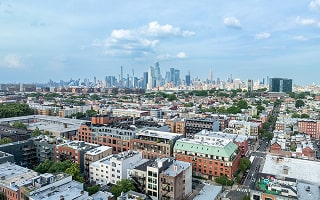
These areas are generally known for delayed permitting, complex zoning codes, strong resistance to densification, and extremely strict preservation laws. Approval processes overseen by zoning boards are often rigorous, typically discouraging developer activity in the municipalities, which include the following:
- Princeton: This borough has strict building height and lot coverage rules and is generally known for high public scrutiny for new construction and variances.
- Cresskill, Tenafly, Oradell, and Westwood: These suburbs in Bergen County are largely known for their resistance to density and multifamily zoning.
- Hoboken: Most deviations in this city require zoning board approval. The city is widely known for complex zoning for multifamily conversions.
- Denville, Millburn, Paramus, and Florham Park: These municipalities are popular for NIMBY (not in my backyard) zoning resistance. They even joined lawsuits to resist New Jersey's affordable housing mandates.
Regulatory Climate Factors

The local regulatory climate, which largely varies by location, plays a vital role in shaping real estate profitability. In addition, regulatory climate factors, which may include permitting, local politics, historic preservation laws, and zoning rules, can greatly determine how easy or challenging it is to flip, develop, or renovate any property in a locality.
Listed in the table below are some major regulatory climate factors influencing real estate development, property renovation, and home flipping in New Jersey, as well as the areas where such factors are commonly found:
Factor |
Impact on Development |
Where It's Found |
|---|---|---|
Zoning Flexibility |
Determines ease of land use |
Jersey City, Morristown, Palisades Park, and Highland Park |
Historic Preservation Laws |
Adds restrictions |
Rocky Hill, Westfield, Jersey City, Franklin Township, Mendham Borough, Hightstown, and Boonton |
Wetlands/Conservation |
Limits buildable land |
Evesham Township |
Inclusionary Zoning |
Requires affordable units |
East Orange, Highland Park, Jersey City, and Morristown |
Building Code Enforcement |
Affects cost/speed |
Newark, Cherry Hill, Princeton, and Westfield |
Local Politics/NIMBYism* |
Blocks or delays projects |
Paramus, Denville, Tenafly, Princeton, Montclair, and Cresskill |
*NIMBYism - Not in My Backyard
What Are the Most Effective Flipping and Resale Strategies for Maximizing Profit in New Jersey's Housing Market?

Adopting the right flipping and resale strategy may enhance the speed of a sale and maximize profit in New Jersey's housing market. Home flipping is the practice of acquiring a property and making certain improvements or renovations with the ultimate plan of quickly reselling it for a profit.
Based on New Jersey's housing market trends, the following are some of the most effective flipping and resale strategies real estate investors may want to leverage in specific municipalities:
-
![]()
Target Distressed or Foreclosed Homes: This involves buying a home in foreclosure or disrepair with the plan to renovate and resell. Generally, foreclosed or distressed properties sell below market value, giving flippers the opportunity to maximize profit. In New Jersey, areas like Jersey City, Trenton, Camden, and Newark usually have several foreclosed homes and bank-owned properties ready for renovation.
-
![]()
Use the 70% Rule: To avoid overpaying for a property in a competitive market, some flippers use the 70% rule. This rule requires paying no more than 70% of a property's after-repair value (ARV) minus its renovation costs. This leaves a decent profit margin after flipping, even if renovation costs are slightly higher than expected. The strategy works best in urban markets like Elizabeth, Newark, Bayonne, Hoboken, and Paterson, where investor markets are active and ARV is higher relative to entry prices.
-
![]()
Try Wholetailing for Speed: Wholetailing involves buying a home, cleaning it up, and making minor repairs before reselling quickly. This strategy is more practicable in fast-paced housing markets like those in Hackensack, Jersey City, and Bayonne, where inventory is limited and demand for housing is strong.
-
![]()
Build Strong Deal Pipelines with Lead Gen: In New Jersey, places like Elizabeth, Newark, Vineland, Irvington, and East Orange are hot markets with lead-generating opportunities. This strategy involves using networking, real estate agents, and online ads to consistently generate leads for off-market inventory.
-
![]()
Renovate with Quality, Don't Cut Corners: Cutting corners with renovations may adversely affect the resale value of a property. To sell a flip fast and generate a high ROI in New Jersey, it's best to renovate with quality before putting it on sale. This works well in markets with many professionals, like Hoboken and Jersey City, where people frequently commute to NYC.
-
![]()
Use the Buy, Rehab, Rent, Refinance, Repeat (BRRRR) Method: Investors can expand their portfolios by building equity, refinancing after rehab, and repeating the process to fund future deals using passive rental income. In New Jersey, the strategy suits areas with stable rent demand and affordable entry, such as Linden, Glassboro, Trenton, and East Orange.
-
![]()
Go Beyond Cosmetic Work (Value-Add Flipping): This strategy generally works in zoning-friendly areas with high demand for rental units, like Newark, Asbury Park, Hoboken, and some parts of Jersey City with lenient zoning. It involves the conversion of structures and/or making some additions. For instance, it's possible to convert a single home into a multiunit property by adding a basement apartment. You can also add some square footage or increase the number of baths/beds to a building before quickly selling it off.
-
![]()
Get Creative or Seller Financing: This is an alternative funding strategy for property purchases in which a distressed home seller extends credit to a buyer without involving conventional financing methods. It enables flippers to buy properties with potentially lower upfront costs, speedy closings, and more flexible terms. This strategy is most effective in small towns and less competitive New Jersey suburbs such as Hillside and Phillipsburg.
-
![]()
Target FHA 203(k) Buyers: This works by targeting home buyers using FHA 203(k) renovation loans. Investors can sell fixer-uppers or renovated properties to buyers intending to finance home purchases through FHA loans. This way, the buyer gets to finance both the purchase and renovation costs through one loan, while the seller can save on renovation expenses. In New Jersey, this strategy is most effective in housing markets with high FHA activity and affordable housing stock, like Millville and Bridgeton. It also works well in East Orange and Irvington, where entry-level pricing generally suits FHA buyers.
-
![]()
Stage and Price Strategically: This strategy works well in New Jersey's high-end or luxury areas like Summit, Ridgewood, Montclair, and Westfield. It can help boost offers, accelerate sales, and ultimately, generate a high potential ROI. Staging primarily involves furnishing and decorating a property to make it more appealing to potential buyers.


How Should Sellers Price Their Homes To Attract Buyers While Maximizing Value in New Jersey?

As a home seller or real estate investor in New Jersey, striking a balance between competitive pricing and ensuring high ROI is crucial to keep the business running. Working with local agents or appraisers to review sold comparables, especially for sales closed within the last 90 days, is key to attracting buyers and maximizing value.
Popular pricing strategies to adopt in New Jersey's housing market include the following:
-
![]() Pricing Just Below Below Market Thresholds: This strategy involves listing a property just below round numbers to boost search visibility and drive more traffic to the listing. For example, home sellers should list a home for $399,900 instead of $400,000. This strategy is popular in competitive housing markets such as Edison, Newark, Perth Amboy, Bloomfield, Linden, and Elizabeth.
Pricing Just Below Below Market Thresholds: This strategy involves listing a property just below round numbers to boost search visibility and drive more traffic to the listing. For example, home sellers should list a home for $399,900 instead of $400,000. This strategy is popular in competitive housing markets such as Edison, Newark, Perth Amboy, Bloomfield, Linden, and Elizabeth.
-
![]() Charm Pricing (Psychological Pricing): This involves using some odd numbers to psychologically create an illusion of a better deal. For instance, pricing a house at $297,700 may signal a deal and trigger potential buyers' emotions. This strategy works well in first-time homebuyer markets and areas with lower- to mid-income earners with FHA or budget-conscious buyers, such as Plainfield, Trenton, East Orange, and Camden.
Charm Pricing (Psychological Pricing): This involves using some odd numbers to psychologically create an illusion of a better deal. For instance, pricing a house at $297,700 may signal a deal and trigger potential buyers' emotions. This strategy works well in first-time homebuyer markets and areas with lower- to mid-income earners with FHA or budget-conscious buyers, such as Plainfield, Trenton, East Orange, and Camden.
-
![]() Pricing to Create a Bidding War: This strategy works by listing a home slightly below its market value to attract multiple offers and create more competition. Once the competition becomes fierce, the seller is in a better position to push the final selling price higher. In New Jersey, it's best to adopt this pricing method in areas with low inventory and high demand, such as Westfield, Hoboken, Princeton, Jersey City, Maplewood, and Montclair.
Pricing to Create a Bidding War: This strategy works by listing a home slightly below its market value to attract multiple offers and create more competition. Once the competition becomes fierce, the seller is in a better position to push the final selling price higher. In New Jersey, it's best to adopt this pricing method in areas with low inventory and high demand, such as Westfield, Hoboken, Princeton, Jersey City, Maplewood, and Montclair.
-
![]() High-Anchor Pricing (Test the Waters): Using this pricing strategy requires some patience. It works by listing a property with an asking price slightly above market value to test buyer interest, then lowering the price later if it doesn't sell. When there's a price drop after negotiation, buyers often perceive value in the property and may want to put in an offer quickly. This strategy is more effective in places like Alpine, Tenafly, Summit, and Princeton, where there are luxury homes with minimal market competition and a larger pool of luxury buyers.
High-Anchor Pricing (Test the Waters): Using this pricing strategy requires some patience. It works by listing a property with an asking price slightly above market value to test buyer interest, then lowering the price later if it doesn't sell. When there's a price drop after negotiation, buyers often perceive value in the property and may want to put in an offer quickly. This strategy is more effective in places like Alpine, Tenafly, Summit, and Princeton, where there are luxury homes with minimal market competition and a larger pool of luxury buyers.
-
![]() Price-Per-Square-Foot Benchmarking: This involves setting a price based on local comparables' price per square foot and lot size. It works well in housing markets with similar designs and layouts, which includes municipalities such as Summit, Parsippany, Freehold, and South Brunswick.
Price-Per-Square-Foot Benchmarking: This involves setting a price based on local comparables' price per square foot and lot size. It works well in housing markets with similar designs and layouts, which includes municipalities such as Summit, Parsippany, Freehold, and South Brunswick.
-
![]() Appraisal-Backed Pricing: This strategy consists of pricing a property based on a pre-listing appraisal to build buyer trust and support a specific asking price. This strategy is especially effective in attracting FHA or VA buyers in municipalities that rely heavily on government-backed financing, such as Clifton, Bayonne, Vineland, and Bloomfield.
Appraisal-Backed Pricing: This strategy consists of pricing a property based on a pre-listing appraisal to build buyer trust and support a specific asking price. This strategy is especially effective in attracting FHA or VA buyers in municipalities that rely heavily on government-backed financing, such as Clifton, Bayonne, Vineland, and Bloomfield.
-
![]() Net-to-Seller Pricing: Net-to-seller pricing focuses on the home seller's bottom line and what they need to net after commissions and closing costs. It can be useful in a situation where the seller is under financial pressure, downsizing, or relocating, and needs to quickly sell their property. This method of home pricing is common in Camden, Trenton, Elizabeth, Atlantic City, and Paterson.
Net-to-Seller Pricing: Net-to-seller pricing focuses on the home seller's bottom line and what they need to net after commissions and closing costs. It can be useful in a situation where the seller is under financial pressure, downsizing, or relocating, and needs to quickly sell their property. This method of home pricing is common in Camden, Trenton, Elizabeth, Atlantic City, and Paterson.
-
![]() Urgency Pricing (Motivated Seller Strategy): This works well in areas with slower housing markets and longer DOM, like Bridgeton, Salem, Philipsburg, and Plainfield. It involves facilitating a quick sale by setting a price below market value and emphasizing an estate sale, divorce, or relocation as the reason for selling.
Urgency Pricing (Motivated Seller Strategy): This works well in areas with slower housing markets and longer DOM, like Bridgeton, Salem, Philipsburg, and Plainfield. It involves facilitating a quick sale by setting a price below market value and emphasizing an estate sale, divorce, or relocation as the reason for selling.


In New Jersey, home sellers may adopt any of the pricing strategies below, depending on the prevailing market conditions:
Market Condition |
Best Strategy |
|---|---|
Seller's Market |
Underpricing for a bidding war |
Buyer's Market |
Charm pricing or net-to-seller |
Unique, luxury home |
High-anchor + value justification |
Entry-level home |
Just-below-threshold |
Urgent sale needed |
Aggressive urgency pricing |
Flipper or investor listing |
Appraisal-backed or price-per-square-foot benchmarking |
Which Key Economic, Social, and Regulatory Factors Are Driving Current Trends in New Jersey's Local Property Markets?

From regulatory reforms to demographic shifts and job expansions, several factors continue to shape the local property markets in New Jersey, resulting in highly localized market dynamics.
![]() Economic Factors
Economic Factors
 Economic Factors
Strong job markets and redevelopment incentives are some key drivers of current trends in the state's local property markets. Areas with industry expansion and job growth typically witness strong housing demand. For instance, in Morristown, major employers in pharma, biotech, and corporate hubs keep boosting housing demand for upscale rentals and housing. Similarly, first-time homebuyer demand and investor interest continue to increase in redevelopment zones like Camden, with major employers like Cooper University Health Care, Campbell's, and Subaru.
![]() Demographic and Social Factors
Demographic and Social Factors
 Demographic and Social Factors
Immigration, urbanization, and demographic shifts are a few factors influencing housing demand in New Jersey's suburban and urban core markets. For instance, young professionals, who are mainly Gen-Z and millennial homebuyers, continue to seek modern communities with transit access in areas like Hoboken, Jersey City, Asbury Park, and Montclair.
Furthermore, in Westfield, Toms River, and Brick, an aging population looking to downsize continues to drive demand for low-maintenance homes.
![]() Regulatory and Legal Framework
Regulatory and Legal Framework
 Regulatory and Legal Framework
Local real estate regulations like preservation laws, zoning, development approvals, and environmental restrictions, and the difficulty in navigating them, generally determine what, where, and how fast something can be built.
For example, historic preservation constraints limit exterior renovations and development in places like Princeton, Cape May, and Montclair, which typically limit opportunities for new builds and flips. In areas like Maplewood, Westfield, Millburn, and Ridgewood, NIMBYism and strict zoning can hamper multifamily development.
![]() Taxation and Fiscal Policy
Taxation and Fiscal Policy
 Taxation and Fiscal Policy
High property taxes in New Jersey are a statewide concern, but the tax environment in places like Essex, Union, and Bergen counties is particularly burdensome. This typically drives buyer behavior, as many residents are either downsizing or relocating to Cumberland and Ocean counties in pursuit of lower property taxes.
![]() Housing Policy and Government Programs
Housing Policy and Government Programs
Certain incentives for accessory dwelling units (ADUs) are being offered across New Jersey to tackle the housing shortage. They generally promote diverse and affordable housing types, which will likely affect real estate investment patterns. Similarly, places like New Brunswick, Newark, and Jersey City take advantage of transit-oriented development initiatives and transit hub credit programs to stimulate mixed-use, high-density development in their local markets.
![]() Infrastructure and Development Trends
Infrastructure and Development Trends
 Infrastructure and Development Trends
Access to infrastructure like transportation and broadband, as well as sustainable development such as flood risk mitigation, can shape homebuyer preferences and drive current trends in local housing markets.
For instance, the risk of flooding impacts property desirability in coastal towns like Brick, Toms River, and Atlantic City. Furthermore, transit rail access in areas such as Rahway, Newark, New Brunswick, and Jersey City typically spurs denser development and boosts property values.
![]() Market Sentiment and Investor Behavior
Market Sentiment and Investor Behavior
 Market Sentiment and Investor Behavior
Generally, perceptions around long-term value and affordability have a way of driving home-selling, buying, and flipping behavior. For instance, real estate investors continue to target distressed properties and older homes in places like Camden, East Orange, Trenton, and Irvington because they're hotbeds for flipping with high potential for equity growth.
Although the housing market in New Jersey still favors sellers, recent shifts point toward a transition to a more balanced environment. Fewer homes now sell above list price, and properties are spending more time on the market. With prices becoming more stable, buyers generally have more choices and some negotiating leverage.
Currently, most potential home buyers in New Jersey favor areas that balance convenience, access to jobs, and relative affordability. This includes places like Montclair, Westfield, Cherry Hill, Jersey City, Bridgewater, and Hoboken. Home sellers' approach to the market is becoming more flexible, as many now adjust list prices and are more open to offering concessions. However, in luxury and commuter markets like Summit, Princeton, and Short Hills, sellers continue to maintain leverage because of the competitive environment for well-maintained homes.
Table of Contents
- New Jersey Home Selling
- Which Areas in New Jersey Offer the Best Return on Investment and Are Easiest for Residential Property Development?
- What Home Styles, Sizes, and Features Tend to Sell Fastest in the New Jersey Market?
- What Should Home Sellers Know About Zoning Laws, Permits, and Regulatory Requirements in New Jersey?
- Which Towns or Cities in New Jersey Are the Easiest, and Hardest, When It Comes to Navigating Real Estate Regulations?
- What Are the Most Effective Flipping and Resale Strategies for Maximizing Profit in New Jersey's Housing Market?
- How Should Sellers Price Their Homes To Attract Buyers While Maximizing Value in New Jersey?
- Which Key Economic, Social, and Regulatory Factors Are Driving Current Trends in New Jersey's Local Property Markets?